- This topic is empty.
-
AuthorPosts
-
11/11/2026 at 16:44 #90791
Published: November 2026 | By Beite Forging Engineering Team
The forged blank price vs finished machined part price gap looks like 55% on a quote sheet — US$6.90 against US$15.20 for a 3.2 kg 42CrMo steering knuckle — but the saving you can actually bank is 20–35%, and this breakdown shows exactly where the rest goes.
This is the finance-grade version of the blank-versus-finished question: a landed-cost waterfall, the volume at which forging beats machining from bar stock, and the buy-to-fly ratio your cost controller should track on every forging RFQ. All figures are FOB China at 5,000 pieces per year and reconcile with our earlier blank-versus-finished buyer's guide, so you can put the two side by side.
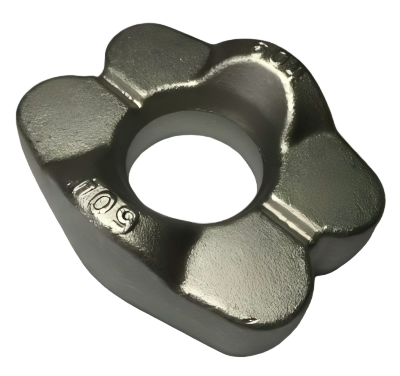
1. The Forged Blank Price Gap, Line by Line: Where 55% Becomes 20–35%
Roughly 60% of the forged blank price vs finished machined part price gap is machining hours — and quoting only that sentence costs buyers money, because the remaining 40% hides in margins, freight and scrap that never appear as a line item. So start from what each route really commits you to. The finished route, for the 3.2 kg knuckle at 5,000 pieces per year:
• Finished machined part, FOB China — US$15.20
• Export packaging to protect finished surfaces — US$0.35
• Sea freight to a US Gulf port — US$0.25
• Landed cost, finished route: US$15.80 per piece
The blank route, same part, same volume:
• Forged blank, FOB China, normalized and 100% magnetic-particle inspected — US$6.90
• Export packaging and sea freight — US$0.40
• Your machining, 8.5 minutes including tooling and 2.5% scrap — US$4.40 at an in-house cell rate of US$31/hour
• Chip recovery credit, 0.8 kg of swarf at US$0.31/kg — −US$0.25
• Landed cost, blank route: US$11.45 per piece — a 27% saving, about US$21,750 a year
Why a range and not one number? Because the only real variable is your machining rate. At Beite we quote the blank side fixed and let buyers run the scenarios:
✅ Contract machine shop, fully loaded US$45/hour → saving lands at about 20%
✅ In-house machining center at average utilization → about 27%
✅ In-house cell with idle capacity, variable cost only → up to 34%
Below that range, buying blanks stops paying: if your machining route is slower than the forge's near-net-shape assumption, or you add a second setup the quote never assumed, the gap can shrink under 10%. That is a drawing problem, not a pricing problem — which is exactly why the waterfall should be visible before tooling is approved.
✅ Bottom line: The 20–35% is not a discount a supplier hands you — it is the machining margin and the chip weight you stop paying someone else for.
2. Two Numbers That Decide Whether the Saving Is Real
Forging vs machining from bar stock: where the cost crossover volume sits
The forging vs machining from bar stock cost crossover volume sits near 300 pieces for a knuckle of this class — below that, cutting from solid is honest money; above it, die amortization drops under US$0.50 per piece and never looks back. The arithmetic, on the same 3.2 kg part:
• Bar route: saw-cut 42CrMo block of 6.5 kg at US$1.30/kg = US$8.45, plus 55 minutes of machining from solid at US$37/hour = US$33.90 — about US$42.35 per piece
• Forge route: blank US$6.90, machining 8.5 minutes US$5.30, freight US$0.40 — about US$12.60 per piece
• Saving of roughly US$29.75 per piece against tooling and first-article cost near US$9,500 → crossover at about 320 pieces
Shape moves that number hard. Simple, axisymmetric flanges can cross below 100 pieces; deep-ribbed, multi-plane parts can push the crossover past 2,000–3,000 pieces. At Beite, die amortization is quoted as its own line — ask any custom forging supplier you compare us against for the same figure. It turns the crossover from a guess into a division problem.
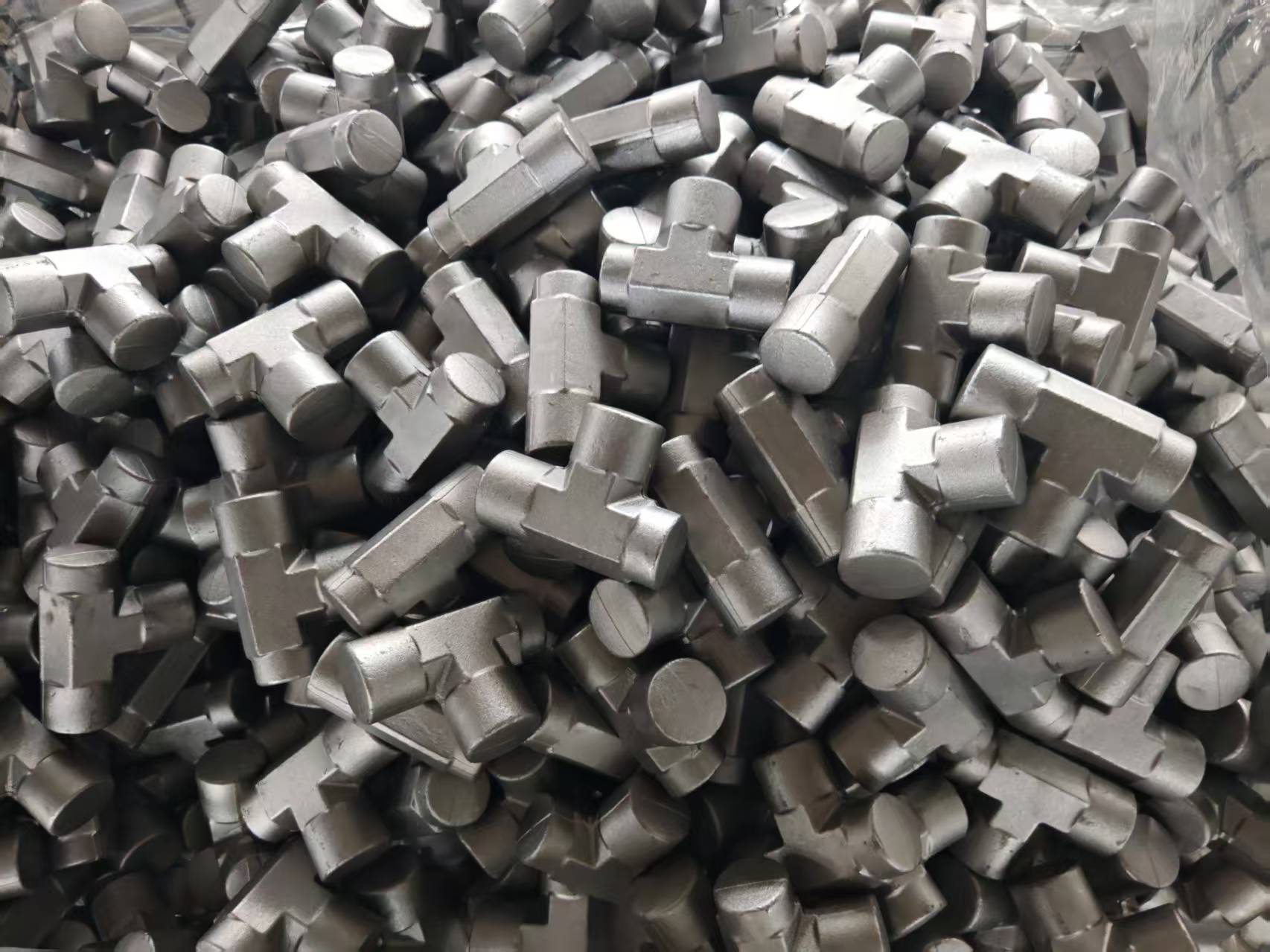
Buy to fly ratio calculation for forged components
The buy to fly ratio calculation for forged components is one division — raw purchased weight divided by finished part weight — but it is the fastest sanity check you can run on a forging quote. On the same knuckle:
• Forged blank route: 3.4 kg blank ÷ 2.6 kg finished = buy-to-fly 1.31. You buy 0.8 kg of chips per part.
• Bar stock route: 6.5 kg block ÷ 2.6 kg finished = buy-to-fly 2.50. You buy 3.9 kg of chips per part.
At 5,000 pieces, that one ratio difference is 15.5 tonnes of steel a year — roughly US$20,000 of material that either gets forged into shape or machined into swarf. A workable target for closed-die automotive forgings is buy-to-fly below 1.5; if a quote implies more than 1.8, ask the forge about preform design or a near-net-shape variant before you accept the blank weight.
✅ Bottom line: Above roughly 300 pieces the die is paid for by chips you never cut; below it, bar stock is honest money.
Frequently Asked Questions
Q: Does the forged blank price vs finished machined part price gap survive freight, duty and die amortization?
A: Yes — with one condition. Duty applies equally to blanks and finished parts, so it cancels out; freight is shown in the waterfall above and costs less for blanks because you are not shipping surface protection. Die amortization at 20,000 shots adds under US$0.50 per piece. The condition is your machining rate: at a fully loaded US$45/hour contract shop the net saving holds near 20%, and with idle in-house capacity it reaches about 34%. Beite publishes the waterfall so buyers can substitute their own rate before approving tooling.
Q: At what volume does forging beat machining from bar stock?
A: Around 300 pieces for a steering-knuckle-class part — the forging vs machining from bar stock cost crossover volume calculated above. Simple flange-type parts can cross below 100; deep-ribbed parts that need multiple die impressions can push the crossover to 2,000–3,000 pieces. The honest way to get your own number is to ask the forging factory for die cost, guaranteed shot count and per-piece saving as three separate figures — then divide.
Q: How does the buy to fly ratio calculation for forged components affect total cost?
A: Directly. Every 0.1 point of buy-to-fly on a 2.6 kg finished part is roughly 260 g of purchased steel per piece — about US$1,430 a year at 5,000 pieces, before you count the machining minutes to remove it. A forge that quotes blank weight next to price is telling you the preform has already been optimized; one that does not is inviting you to buy chips.
Get the Three-Route Quote, Not One Price
Send your drawing or 3D model to Beite and we will price the same part three ways — machining from bar stock, forged blank, and blank with rough machining — with die amortization shown as its own line, so your crossover volume and buy-to-fly land in your model, not in our favor. Huaian Beite Forging Co., Ltd. has forged steering knuckles, gear blanks, brake cams and flanges in Huai'an, Jiangsu since 2006 under IATF 16949:2016, with 30+ forging lines across a 15,000 m² plant. OEM and custom forging programs start from 100 pieces; blank quotes return within 48 hours.
Email habetter@163.com or request a quote online. To see typical blank geometries first, browse our forged automotive forging components.
http://www.beiteforge.com
Huaian better forging Co., Ltd -
AuthorPosts

- You must be logged in to reply to this topic.