- This topic is empty.
-
AuthorPosts
-
02/06/2026 at 18:21 #89067
Modern commercial and government buildings face unprecedented security challenges. From diplomatic missions and financial institutions to healthcare facilities and municipal offices, today’s high-value infrastructure requires facade solutions that deliver far beyond aesthetics—they must provide verified, multi-threat protection while maintaining architectural integrity and operational efficiency.
The Critical Gap in Conventional Building Envelopes
Traditional curtain wall and window systems are engineered primarily for weather resistance, thermal performance, and visual appeal. While these attributes remain essential, they fail to address the layered security threats facing sensitive facilities: forced entry attempts, ballistic attacks, blast events, fire propagation, and extreme wind loading from hurricanes or explosions.
The challenge intensifies when projects demand compliance with multiple international standards—European EN codes, American UL certifications, Australian AS requirements, or Middle Eastern SASO regulations—each with distinct testing protocols and performance thresholds. Facilities managers and architects often face a painful trade-off: compromise security for building performance, or accept bulky, visually intrusive protection systems that contradict modern design principles.
What Defines True Multi-Threat Security Glass Systems
Genuine security-rated building envelopes integrate five core protective capabilities, each independently tested and certified:
Burglar Resistance: Engineered to defeat forced entry through reinforced framing, multi-point locking systems, and laminated glass assemblies. Performance is measured under EN 1627-1630 (Resistance Classes RC1 through RC6) and EN 356 (glass classifications P2A through P8B), which simulate progressively aggressive attack scenarios using hand tools, power tools, and heavy implements.
Bullet Resistance: Multi-layered glass-polycarbonate composites tested to stop specific ammunition types. EN 1063 and EN 1522-1523 define seven ballistic resistance classes (BR1-BR7 / FB1-FB7), while UL 752 specifies eight protection levels and NIJ 0108.01 addresses handgun and rifle threats common in North American contexts.
Blast Resistance: Systems designed to contain high-pressure shock waves and prevent dangerous glass fragmentation. EN 13123-2, GSA TS01-2003, and ISO 16933 standards measure performance against calibrated explosive charges, with ratings such as EXR3 (12 kg at 5.5 meters), GSA Level 2 ("Very High" protection), and ISO Hazard Rating B ("No Hazard").
Fire Resistance: Intumescent seals and fire-rated glass maintain integrity and insulation for specified durations—typically one or two hours—under EN 1634-1, EN 1364-3, and Singapore’s SS 332. This delays flame spread and toxic smoke penetration, providing critical evacuation time.
Hurricane and Wind Load Resistance: Reinforced structural anchoring and pressure-equalized drainage systems enable facades to withstand extreme wind pressures exceeding 2,500 Pa, essential for coastal installations and high-rise applications.
Critically, these capabilities must coexist with baseline building performance: sound insulation (Rw ≥ 35-40 dB), air tightness, water tightness (up to 1,500 Pa), and thermal efficiency (U-values ≤ 2.0 W/m²·K), ensuring occupant comfort and energy compliance alongside protection.
Engineering Integration: Where Security Meets Architecture
The technical complexity lies not merely in sourcing certified glass, but in integrating that glass into complete facade systems—curtain walls, windows, doors—that maintain security ratings through every joint, seal, and anchor point.
Unitized Curtain Wall Systems represent the pinnacle of this integration. Factory-prefabricated modular panels arrive on-site fully assembled, glazed, and tested, with concealed structural reinforcements and multi-layered glass already installed. This approach delivers three advantages: it minimizes weather exposure during installation (critical for maintaining seal integrity), reduces construction timelines for occupied facilities, and ensures consistent quality through controlled manufacturing environments rather than field assembly.
Reinforced Framing Technology employs high-strength aluminum alloy (6063-T6) or structural steel profiles with thickened walls and internal stiffeners. Unlike standard commercial frames, security-rated systems distribute impact forces across multiple anchor points and incorporate anti-pry flanges that resist crowbar attacks.
Pressure-Equalized Rain Screen Design addresses a subtle but critical vulnerability: water infiltration under wind-driven pressure. By creating equalized-pressure cavities within the frame assembly, these systems neutralize the pressure differential that forces water through conventional seals—essential for maintaining long-term weatherproofing in blast-rated installations where frame deflections may be significant.
Smart Manufacturing and Precision Tolerances ensure that complex laminated glass units—some exceeding 100 mm in thickness—fit precisely within reinforced frames. Multi-axis CNC machining achieves micron-level accuracy in aluminum extrusions, while automated quality monitoring systems verify every critical dimension before shipment. This precision prevents field modifications that could compromise security ratings.
Navigating Global Standards: Regional Performance Adaptation
Security glass specifications vary substantially by jurisdiction, reflecting different threat assessments, climatic conditions, and regulatory traditions:
In Europe, EN standards dominate, with curtain walls typically meeting air tightness of 0.5-1.0 m³/m·h (EN 12207), water tightness of 1,000-1,500 Pa (EN 12208), and thermal transmittance ≤ 1.8 W/m²·K (EN 14351-1). Security overlays—burglar, bullet, blast, fire—add specific EN 1627, EN 1522, EN 13123, and EN 1634 certifications.
Australia and New Zealand require compliance with AS 4284 for curtain walls and AS 2047 for windows, emphasizing cyclone resistance in tropical zones. Performance benchmarks include wind load Class N4 and thermal transmittance ≤ 2.6 W/m²·K under AS/NZS 4859.
The Middle East imposes stringent requirements driven by extreme heat and sandstorm exposure: water tightness to E1200 Pa (EN 12208), wind resistance to 3,000 Pa for coastal areas, and thermal transmittance ≤ 2.1 W/m²·K. Gulf Cooperation Council codes increasingly mandate blast resistance for government and financial facilities.
United States projects follow UL and ASTM protocols: UL 1014 for curtain wall assemblies, ASTM E283 for air infiltration (≤ 0.5 cfm/ft²), ASTM E331 for water penetration (350-700 Pa), and ASTM E330 for structural wind loads (1,500-2,500 Pa). Bullet resistance follows UL 752 (Levels 1-8), while blast resistance references GSA and ASTM F2248 standards.
Singapore mandates SS 212 and SS 332 compliance, with particularly rigorous fire-resistance requirements for high-rise towers. Sound insulation must reach Rw ≥ 38 dB, reflecting dense urban environments.
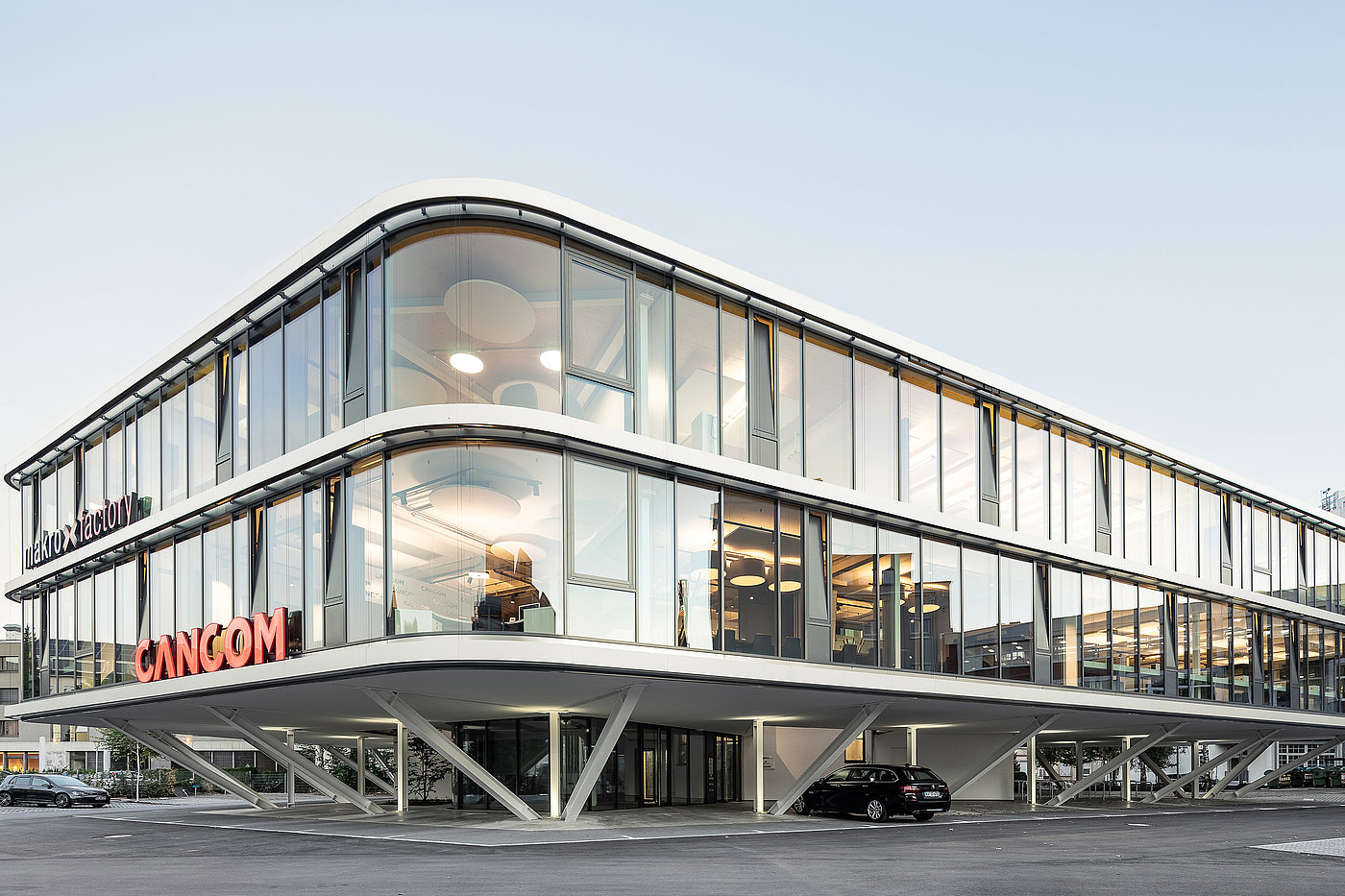
Facilities operating internationally—embassy networks, multinational banks, hotel chains—require facade systems adaptable to multiple codes simultaneously, demanding manufacturers with deep certification expertise and regional testing relationships.
Application Scenarios: Where Security Glass Delivers Critical Value
Diplomatic Missions and Embassies represent the most demanding application, requiring simultaneous bullet, blast, and forced-entry resistance. Facades must appear welcoming and transparent while concealing multi-threat protection, often incorporating thermochromic or electrochromic glass that transitions from clear to opaque based on temperature or electrical signal—enabling blast curtains without permanent visual obstruction.
Financial Institutions prioritize burglar resistance (typically RC4-RC6) and bullet resistance (BR4-BR6 / UL Level 3-5) for teller lines, cash-handling areas, and executive floors. Integration with electronic access control and intrusion detection systems is essential, requiring coordination between facade contractors and security technology vendors.
Government Administrative Buildings balance public accessibility with protection against civil unrest and targeted attacks. Ground-floor facades often incorporate blast-resistant curtain walls rated to GSA Level 2 or EN EXR3, while upper floors use standard security-rated windows.
Healthcare Facilities in conflict zones or high-crime areas require bullet-resistant emergency department entrances and psychiatric ward windows with enhanced forced-entry resistance, combined with fire-rated corridor partitions meeting strict smoke-containment requirements.
Data Centers and Critical Infrastructure demand not only physical security but also resistance to forced ventilation (preventing gas attacks) and electromagnetic shielding—specialized requirements that extend beyond conventional security glass into integrated facade engineering.
Luxury Residential Towers in high-risk regions increasingly specify hurricane-resistant, burglar-resistant window systems that maintain residential aesthetics while providing discreet protection. Thermochromic glass technology offers dynamic solar control—automatically transitioning to heat-reflective mode above 30°C—reducing cooling loads by blocking 95% of UV/IR radiation while preserving views.
The KFORTS Approach: Integrated Security Engineering
Hwarrior Curtain Wall Technology has developed its KFORTS product line specifically to address the commercial and government security glass challenge through vertically integrated capabilities:
Independent R&D and Testing Infrastructure: In-house laboratories certified to conduct EN, UL, AS, and SASO testing protocols enable rapid prototyping and certification without dependence on external facilities. This accelerates customization for project-specific threat profiles.
Modular Security Platforms: Rather than offering fixed products, KFORTS engineers systems around core security platforms—burglar-resistant, bullet-resistant, blast-resistant, fire-resistant—that can be combined and scaled. A single facade may integrate BR5 bullet resistance with RC4 burglar resistance and 2-hour fire rating, all within a unitized curtain wall achieving U-value ≤ 1.8 W/m²·K.
Full-Spectrum Product Range: Security doors (sliding and casement), security windows (sliding, casement, and fixed), and high-security unitized curtain walls share common engineering DNA, enabling consistent performance across all building openings. Frames utilize aluminum 6063-T6 or structural steel with customized finishes; glass assemblies range from 36 mm to 120 mm depending on threat level.
Global Standards Fluency: KFORTS systems hold active certifications across EN 1627 (RC1-RC6), EN 1063 (BR1-BR7), EN 1522-1523 (FB1-FB7), UL 752 (Level 1-7), NIJ 0108.01 (Type I-III), EN 13123-2 (blast), GSA TS01-2003, ISO 16933, EN 1634-1 (fire), and AS 4284/AS 2047. This multi-standard qualification enables seamless specification for international projects without re-engineering.
Structural Engineering Support: In-house teams perform project-specific wind load simulation, seismic resistance verification, and deflection analysis tailored to local codes and site conditions. This ensures security systems integrate with primary building structures without compromising either security ratings or architectural intent.
Proven Project Validation: KFORTS installations span Papua New Guinea healthcare facilities (20,500 m² unitized curtain wall certified to AS 4284), Mauritius commercial plazas (point-supported spider glass systems), and China financial headquarters (21-story aluminum composite and glass facades), demonstrating adaptability across climates, building types, and regulatory environments.
Strategic Selection Criteria for Security Glass Systems
Specifying teams should evaluate potential suppliers against these technical and operational benchmarks:
Certification Depth: Verify that certifications cover complete systems—not just glass—and match project jurisdiction. Request test reports showing frame assemblies, not isolated glass samples.
Customization Capacity: Assess whether the manufacturer can adapt standard systems to project-specific dimensions, performance overlays (combining multiple threat resistances), and aesthetic requirements without losing certifications.
Manufacturing Control: Factory-prefabricated, quality-controlled assembly substantially reduces field defects. Evaluate production facilities for automation level, quality management systems (ISO 9001), and traceability protocols.
Engineering Resources: Complex projects require structural calculations, thermal modeling, and constructability reviews. Manufacturers with in-house engineering teams can resolve design conflicts faster than those dependent on external consultants.
Regional Experience: Prior installations in similar climates and regulatory environments indicate practical knowledge of permitting processes, local testing requirements, and performance longevity.
Lead Times and Logistics: Security glass systems involve longer manufacturing cycles—often 12-16 weeks—due to lamination curing and testing requirements. Suppliers with established global logistics and regional warehousing can better meet construction schedules.
Lifecycle Support: Post-installation performance depends on proper maintenance of seals, hardware, and coatings. Evaluate warranty terms, spare parts availability, and technical support infrastructure.
Conclusion: Engineering Peace of Mind
Security glass for commercial and government buildings represents far more than a product purchase—it is a long-term infrastructure investment that must perform flawlessly under the worst imaginable circumstances while remaining invisible during decades of normal operation.
The most successful installations share common characteristics: they begin with clear threat assessments and performance objectives, engage manufacturers with deep technical capabilities and multi-standard certification expertise, and integrate security systems holistically with architectural design and building operations.
As global security challenges intensify and building codes evolve, the gap widens between conventional facade suppliers and specialized security engineering firms. Organizations responsible for protecting people, assets, and sensitive operations increasingly recognize that true security glass systems demand more than specification compliance—they require partnership with manufacturers who combine materials science, structural engineering, manufacturing precision, and global standards fluency.
For facilities where failure is not an option, security glass systems engineered to certified, multi-threat standards deliver something invaluable: the confidence that building envelopes will protect occupants when it matters most, while supporting operational excellence and architectural vision every single day.
https://www.hwarrior.com/
HWARRIOR PTE LTD (SINGAPORE) -
AuthorPosts

- You must be logged in to reply to this topic.