- This topic is empty.
-
AuthorPosts
-
16/11/2026 at 14:18 #90852
Choosing a pet tent manufacturer involves more than comparing unit prices or reviewing product photographs. The manufacturer must be able to translate a product concept into a repeatable design, select materials appropriate for the intended use, maintain consistent sewing and assembly quality, and deliver products that meet packaging and shipment requirements. For brands developing private-label pet tents or expanding an outdoor product range, the difference between a workable prototype and a production-ready product often lies in engineering coordination and manufacturing control.
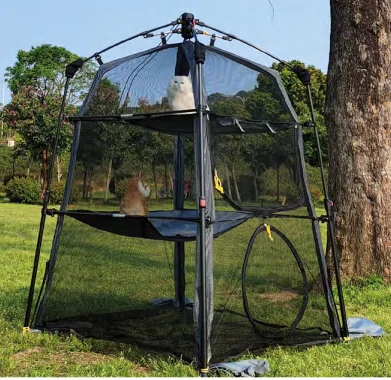
Quzhou Sanhe Outdoor Equipment Technology Co., Ltd. integrates tent design, research and development, production, and sales. Its manufacturing operation covers more than 18,000 square meters and employs over 300 people, including approximately 30 technical staff. The company has an annual production capacity of 500,000 units across its product range, which includes camping tents, family tents, beach tents, inflatable tents, children's tents, and outdoor gazebos. These capabilities provide a basis for discussing custom pet tent projects that require coordinated development and production planning.
Define the Product Specification Before Requesting a Quote
A quotation is only meaningful when the product scope is clearly defined. Two pet tents with similar dimensions may have substantially different costs because of differences in fabric weight, frame construction, mesh coverage, floor reinforcement, zipper quality, printing, and packaging.
The initial specification should identify the intended pet size and use environment. A tent for a small cat or dog may prioritize a compact footprint and lightweight structure, while a larger dog model may require a wider entrance, reinforced floor, stronger frame connections, and more room for turning and resting. The product should be designed around the pet's actual movement and resting posture rather than dimensions alone.
The specification should also distinguish between indoor and outdoor requirements. Indoor products may not need the same water-resistance or anchoring features as camping models. Outdoor pet tents may require a more durable floor, improved ventilation, secure ground attachments, and materials selected for exposure to sunlight and moisture.
Packaging requirements should be confirmed at the same stage. Folded dimensions, packed weight, carton quantity, retail-box design, and accessory storage affect freight efficiency and warehouse handling. A design that performs well when assembled may still be commercially inefficient if its folded package is unnecessarily large.
A complete request for quotation should therefore include drawings or reference images, target dimensions, material preferences, color and branding requirements, expected order quantity, packaging specifications, and any required tests or compliance documents. Where some details remain undecided, a manufacturer can help compare feasible alternatives before the final specification is locked.
Custom Pet Tent Development: From Sample to Approved Design
The sample stage should resolve functional questions rather than serve only as a visual approval. A first prototype can confirm proportions, appearance, access opening, and general assembly. Further evaluation should determine whether the structure remains stable during pet movement, whether the entrance is convenient, and whether the tent can be folded and packed without excessive effort.
Material substitutions require particular care. Changing a fabric's weight or coating may affect flexibility, sewing behavior, packed volume, and water resistance. Replacing a frame component may change the tent's deployed shape or increase stress at the joints. Even a small adjustment to the floor pattern can influence how the base sits on uneven ground.
For these reasons, changes should be documented and reviewed as part of the product-development process. A sample approved with one fabric or frame configuration should not automatically be considered equivalent to a later production version using different components.
A useful approval process includes a defined sample version, a written specification, confirmed artwork, packaging details, and an agreed list of performance checks. If the product requires third-party testing, the test sample should represent the final production configuration as closely as possible.
This process reduces the risk of late-stage changes that affect cost, lead time, or product performance.
Materials and Construction Affect Both Cost and Product Life
Fabric is one of the most visible cost variables, but the lowest fabric price does not necessarily produce the lowest overall cost. Lightweight materials may reduce shipping weight, yet they may be unsuitable for a pet tent exposed to frequent scratching or repeated outdoor use. A heavier fabric can improve durability in selected areas, but using it throughout the product may increase packed weight and material consumption without delivering proportional benefits.
A balanced construction strategy may use different materials or reinforcement levels for the upper body, floor, and high-contact zones. The correct combination depends on the intended use and target retail positioning. Floor panels should be evaluated for abrasion, moisture exposure, and seam integrity, while upper panels may prioritize ventilation and low weight.
Frame design has a similar cost-performance relationship. The frame must provide sufficient support without making assembly difficult or increasing packed dimensions unnecessarily. Connection details, pole sleeves, corner reinforcement, and attachment points should be assessed together because overall stability depends on the complete structure.
Zippers, mesh, binding tape, elastic parts, and hook-and-loop fasteners can also affect long-term usability. These components should be selected for the expected frequency of use and verified during sample testing. A lower-cost zipper that snags during repeated operation can undermine the perceived quality of the entire product.
The best specification is therefore not necessarily the one with the most expensive components. It is the one that allocates material and construction quality to the areas where performance matters most.
Quality Control for Consistent Production
Mass production introduces variation that may not be obvious in a single approved sample. Differences in fabric batches, cutting accuracy, sewing tension, reinforcement placement, and assembly methods can affect dimensions and appearance. A manufacturing partner should have a defined process for checking these variables throughout production.
Incoming material inspection should verify key specifications and identify visible defects before materials enter cutting. Cutting and sewing controls should focus on pattern accuracy, seam allowance, stitch consistency, panel alignment, and reinforcement placement. Assembly inspection should confirm that frames, connectors, zippers, and accessories fit the approved design.
Finished-product checks should verify assembled dimensions, packed dimensions, component completeness, appearance, and setup instructions. For pet tents intended for outdoor use, the quality plan may also include checks for water resistance, anchoring components, and frame stability, based on the agreed product specification.
Testing should be selected according to actual risks. Repeated setup and folding can reveal wear in flexible frames and connection points. Zipper cycling helps identify operating problems. Abrasion checks can assess the durability of high-contact fabric areas, while seam testing can help identify weak construction details. Any numerical acceptance criteria should be agreed upon before production rather than introduced after defects are discovered.
Quzhou Sanhe reports operating under ISO 9001 and ISO 14001 management systems and holding SEDEX and BSCI certifications. It also states that its products can undergo professional testing by BV and SGS. Buyers should confirm the validity, scope, and applicability of any certification or test report required for a particular pet tent, market, or retail program.
Production Capacity, Lead Time, and Order Planning
Production capacity matters, but total capacity alone does not determine whether a factory can meet a specific delivery schedule. Lead time depends on material availability, sample approval, tooling or pattern adjustments, order complexity, production-line allocation, inspection requirements, and packaging preparation.
A custom pet tent may need additional time if it uses a new structure, special fabric, customized printing, or non-standard packaging. Changes made after sample approval can also affect procurement and production planning. A realistic schedule should identify milestones for specification confirmation, sample development, material approval, bulk production, final inspection, and shipment.
Order quantity should be considered alongside product complexity. Larger volumes may improve material purchasing efficiency and production-line utilization, but they also increase the cost of correcting a design issue discovered late. For a new product, a controlled initial order can provide useful feedback before the design is expanded into additional sizes or variations, provided the order structure is commercially feasible.
Forecasts and confirmed orders should be distinguished clearly. Sharing expected demand can help a manufacturer plan materials and capacity, while firm quantities and delivery dates provide a more reliable basis for production commitments.
OEM and ODM Cooperation for Pet Tent Brands
OEM and ODM arrangements serve different development needs. OEM projects generally follow a customer's established design and specification, while ODM cooperation may involve greater input from the manufacturer on product structure, materials, appearance, and manufacturability. The appropriate model depends on how much of the design has already been defined and how much development support is required.
For OEM production, the priority is faithful execution of the approved drawings, bill of materials, workmanship requirements, and packaging instructions. For ODM development, the process should also establish design ownership, sample approval responsibilities, revision control, and the conditions under which the final design can be used.
Intellectual property, artwork confidentiality, tooling ownership, and permitted use of customized designs should be addressed in the project agreement. A factory's general product-development capability does not replace the need for clear contractual terms.
Quzhou Sanhe reports more than 130 patents and experience in ODM cooperation with outdoor brands across multiple markets. For a pet tent project, the specific value of that experience should be evaluated through relevant samples, engineering communication, quality documentation, and the manufacturer's ability to meet the required specification.
Selecting a Pet Tent Manufacturing Partner
A suitable manufacturing partner should demonstrate more than competitive pricing. The key questions are whether the factory understands the intended application, can explain material and construction trade-offs, maintains a controlled sample-to-production process, and can provide the inspection records needed to verify the finished product.
Before placing a bulk order, confirm the final specification, sample version, material substitutions policy, inspection criteria, packaging configuration, production schedule, and required compliance documentation. It is also useful to establish how defects, production changes, and delivery risks will be communicated and resolved.
For brands seeking a custom pet tent, Quzhou Sanhe Outdoor Equipment Technology Co., Ltd. offers an integrated tent-development and manufacturing background, supported by an established production operation and experience across several tent categories. A clear technical brief and a documented sample-approval process are the most effective starting points for determining whether the factory's capabilities match the project's requirements.
http://www.sunhikegear.com
Quzhou Sanhe Outdoor Equipment Technology Co., Ltd. -
AuthorPosts

- You must be logged in to reply to this topic.