- This topic is empty.
-
AuthorPosts
-
17/08/2026 at 15:04 #89790
Bringing a new electronic product to market is no longer simply about designing a functional PCB. The real challenge lies in ensuring that a design validated during prototyping can transition smoothly into high-volume manufacturing without unexpected delays, quality issues, or excessive costs. Many projects perform well during the prototype stage but encounter difficulties once production scales from a handful of boards to thousands of assemblies.
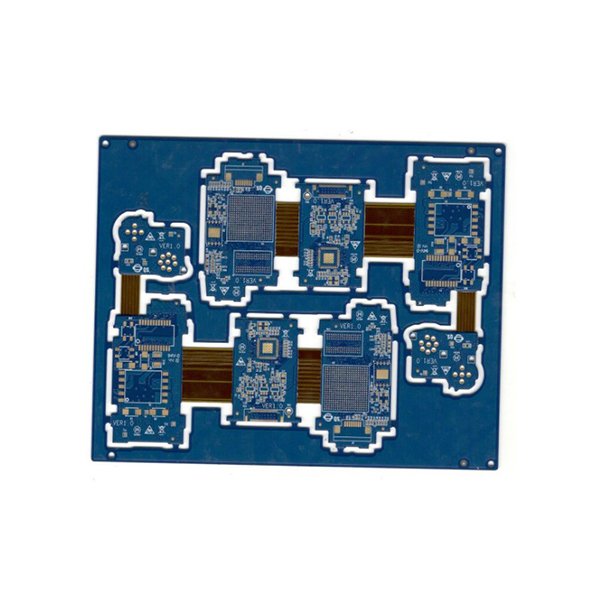
A successful PCB prototype to mass production process requires manufacturing considerations to be integrated from the earliest stages of product development. Design optimization, material selection, process capability, component availability, and quality control all influence whether a project reaches production on schedule.
With more than 15 years of PCB manufacturing and PCBA experience, Rongbaijia Technology helps customers bridge the gap between engineering validation and stable mass production through vertically integrated manufacturing and one-stop assembly services.
Why Prototype Success Doesn't Always Guarantee Production Success
Engineering prototypes are typically built in small quantities under controlled conditions. Manufacturing engineers can manually adjust certain processes, replace unavailable components, or perform additional inspections to ensure the prototype functions correctly.
Mass production operates under very different conditions.
Thousands of boards must be manufactured consistently using standardized processes, automated equipment, and repeatable quality control. Even minor design issues that appear insignificant during prototyping can become major production bottlenecks.
Common examples include insufficient solder mask clearance causing bridge defects, component spacing that limits automated placement efficiency, or uncontrolled impedance variations affecting high-speed signal integrity. These problems may only appear once production volumes increase.
The transition from prototype to production therefore requires more than duplicating the original design. It requires manufacturing optimization.
Design for Manufacturability Determines Production Efficiency
One of the most effective ways to reduce production risk is Design for Manufacturability (DFM).
Instead of identifying manufacturing problems after production begins, DFM evaluates the PCB layout before fabrication starts. Engineering teams review copper spacing, drill sizes, pad geometry, solder mask design, panelization, fiducial placement, component orientation, and assembly clearances.
For multilayer products, stack-up planning also becomes critical. Controlled impedance traces, differential pair routing, via structures, and copper balancing directly affect fabrication yield and electrical performance.
At Rongbaijia Technology, DFM analysis is integrated into the engineering workflow before production release, allowing potential manufacturing issues to be corrected early rather than becoming expensive production defects.
Manufacturing Capability Should Match Product Complexity
Not every PCB manufacturer offers the same manufacturing capability. Selecting a supplier that matches product complexity is essential for long-term scalability.
Consumer electronics often require standard FR-4 multilayer boards, while communication equipment, industrial automation, medical electronics, and AI hardware frequently demand significantly higher manufacturing precision.
Rongbaijia supports production ranging from single-sided boards to 20-layer and higher multilayer PCBs, including controlled impedance, thick copper structures, HDI technology, metal-core PCBs, high-frequency materials, flexible circuits, and rigid-flex designs.
This broad manufacturing capability allows customers to maintain the same manufacturing partner as products evolve from early prototypes into advanced commercial products without changing suppliers during development.
Component Supply Becomes More Critical During Mass Production
Component sourcing is often underestimated during prototype development.
An engineer may easily purchase ten ICs through distributors for prototype assembly. Producing 20,000 assemblies requires an entirely different procurement strategy.
Lead times, lifecycle management, authorized sourcing, alternative components, counterfeit prevention, and inventory planning all become production-critical factors.
A vertically integrated PCBA supplier simplifies this challenge by combining PCB fabrication, component procurement, SMT assembly, testing, and final assembly under one management system.
Instead of coordinating multiple suppliers, customers work with one manufacturing partner responsible for the complete production process, reducing communication delays and improving delivery predictability.
Automated Manufacturing Improves Consistency
Production consistency depends heavily on automation.
Rongbaijia Technology operates seven fully automated SMT production lines together with two wave soldering production lines, enabling efficient assembly for both surface-mount and through-hole components.
Automated placement significantly improves positioning accuracy while maintaining stable throughput across production batches. Combined with standardized process control, automation reduces human variation and supports repeatable manufacturing quality from the first production lot to long-term supply.
For customers launching products globally, consistent manufacturing is often more valuable than simply achieving the lowest unit price.
Quality Control Must Cover the Entire Manufacturing Process
Inspection performed only at the end of production cannot fully guarantee product quality.
Modern electronic manufacturing increasingly relies on process-based quality control.
Every manufacturing stage should contribute to defect prevention rather than defect detection alone.
Rongbaijia incorporates Automated Optical Inspection (AOI), flying probe testing, and complete production traceability throughout the manufacturing process. These systems verify solder joint quality, PCB connectivity, component placement accuracy, and production records before products move to the next operation.
The result is higher first-pass yield and lower field failure rates after product shipment.
Scaling Production Without Sacrificing Delivery
As product demand grows, production flexibility becomes increasingly important.
Some manufacturers perform well during prototype production but struggle when customers require larger production volumes within shorter delivery windows.
With an annual PCB production capacity of approximately 1.2 million square meters, Rongbaijia supports both low-volume engineering builds and large-scale commercial manufacturing without requiring customers to transfer production between different factories.
This manufacturing continuity simplifies engineering change management while maintaining consistent quality standards throughout the product lifecycle.
One Manufacturing Partner Simplifies Project Management
Managing separate PCB suppliers, assembly factories, component distributors, testing providers, and logistics companies increases project complexity.
Each additional supplier introduces communication risks, scheduling conflicts, and quality uncertainties.
A one-stop manufacturing model integrates PCB fabrication, material sourcing, SMT assembly, through-hole soldering, ICT, FCT, product assembly, and final shipment within one coordinated production system.
This approach not only shortens production cycles but also provides clearer accountability whenever engineering modifications or production adjustments become necessary.
Conclusion
Moving from PCB prototype to mass production requires much more than increasing production quantity. Successful scale-up depends on manufacturable design, stable component supply, automated production, systematic quality control, and manufacturing capacity capable of supporting long-term product growth.
By combining PCB fabrication, component sourcing, automated assembly, engineering support, and full-process quality management under one roof, Rongbaijia Technology helps customers reduce production risk while accelerating time-to-market. Whether developing consumer electronics, industrial control systems, medical devices, or communication equipment, an integrated manufacturing strategy provides the consistency needed for successful volume production.
http://www.rbjpcb.com
Shenzhen Rongbaijia Technology Co., Ltd. -
AuthorPosts

- You must be logged in to reply to this topic.