- This topic is empty.
-
AuthorPosts
-
23/11/2026 at 21:51 #90988
Buyers searching for a durable FPV fixed-wing drone propeller factory are typically weighing three concerns at once: will the propeller survive sustained high-speed cruise loads, will it maintain thrust efficiency across varied flight phases, and can the manufacturer supply consistent quality at scale. Ningbo Gemfan Hobby Co., Ltd., operating under the brand Gemfan Hobby, has built its propeller business around these exact engineering questions, and its VORTEX series offers a useful case study in how durability-focused design actually gets translated into product specifications.
Why Durability Is an Engineering Problem, Not Just a Material Choice
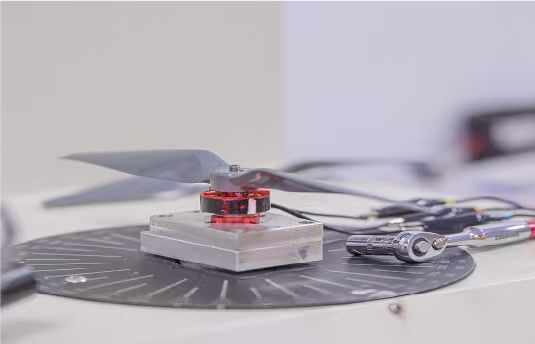
According to Gemfan Hobby’s internal engineering analysis, the research and development of 8-inch electric propellers is not simply a matter of increasing pitch or blade count. Instead, it requires resolving several contradictions simultaneously: the balance between power and efficiency, structural deformation of blades at high RPM, power response and motor adaptation, vibration and noise control, and reliability in complex environments.
Structural Deformation Under Load
One of the most direct threats to propeller durability is structural deformation. As the company explains, centrifugal force and aerodynamic bending moments cause blades to flex during operation, which leads the actual pitch distribution to deviate from design values and affects thrust and efficiency performance. Gemfan Hobby addresses this through ply design, pre-deformation, and aeroelastic tailoring, aiming to keep the pitch close to the target design even under real operating conditions. This is a core consideration for any fixed-wing propeller factory claiming durability, since a propeller that deforms unpredictably will degrade in both performance and service life.
Reliability Across Environmental Conditions
Durability also depends heavily on how a propeller withstands environmental stress. Gemfan Hobby notes that sand erosion, rain, salt spray, and temperature cycling each affect propeller lifespan and performance differently—through surface loss, moisture absorption, corrosion, and thermal stress, respectively. The company’s stated approach is to translate material selection, coatings, and manufacturing consistency into testable reliability items, so that failure modes remain controllable rather than unpredictable. This systematic framing is relevant for fixed-wing operators who need propellers that perform consistently across different missions, including logistics transport and agricultural protection, both of which expose equipment to variable outdoor conditions.
VORTEX Series: Engineering Choices for High-Speed Fixed-Wing Platforms
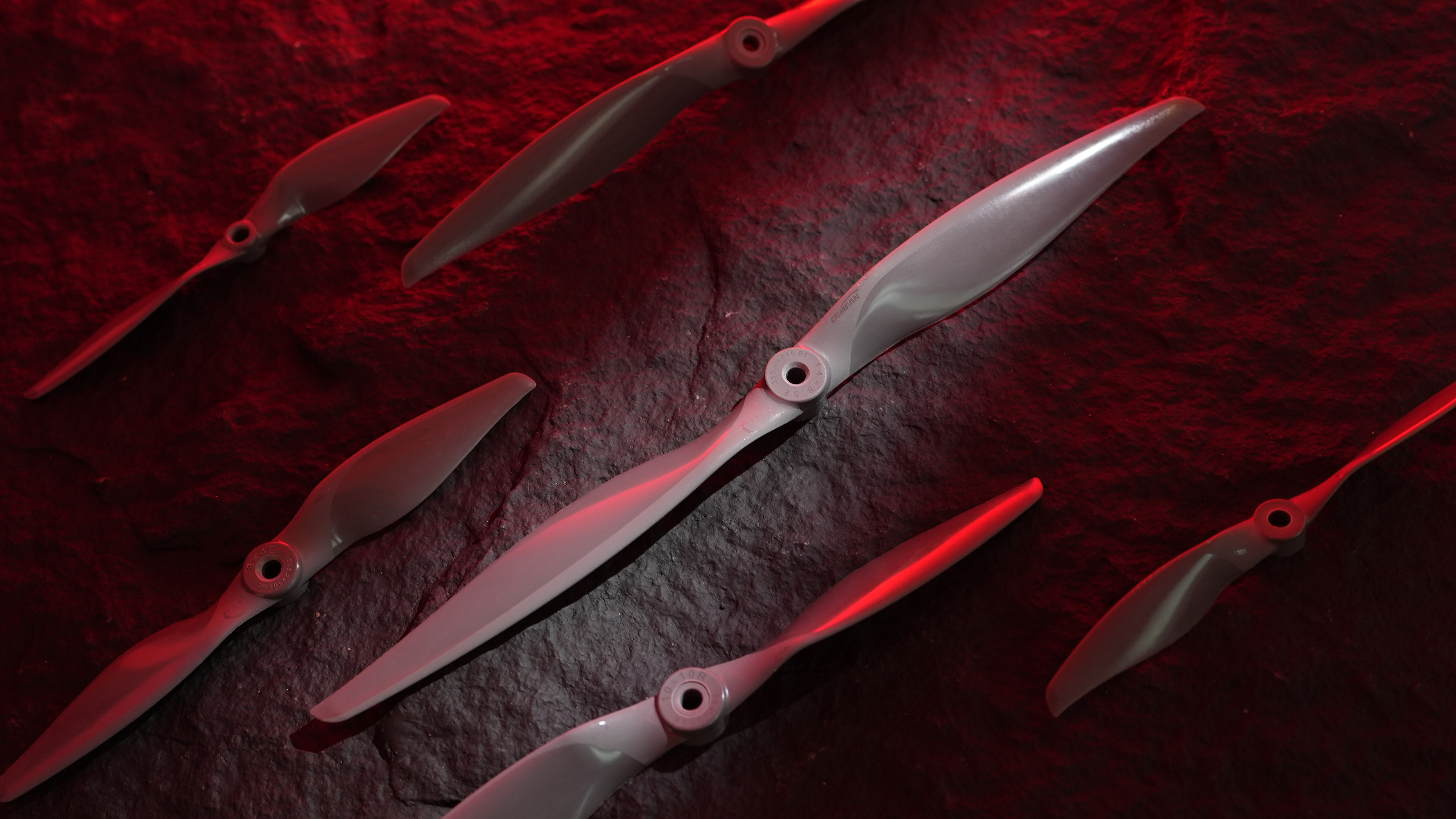
Gemfan Hobby’s VORTEX series is positioned as its electric fixed-wing propeller line, covering multiple diameters, pitches, blade counts, and rotation specifications for high-speed FPV, electric fixed-wing, logistics transport, and agricultural protection applications. The series’ stated R&D directions include aerodynamic airfoil optimization to improve energy exchange between the propeller and air, high-strength glass fiber nylon material to enhance structural stability under high-speed rotation and continuous load, precision dynamic balance to reduce rotational vibration, multi-specification matching for different motors and flight missions, and structural optimization that balances blade strength, aerodynamic efficiency, and operational reliability.
Two-Blade Propellers for Fixed-Wing Cruise Efficiency
Within the VORTEX 8-inch two-blade series, Gemfan Hobby offers a graduated set of pitch options—8×4, 8×6, 8×8, 8×9, and 8×10—each targeting a different point on the spectrum between low-speed propulsion and high-speed cruise. The 8×4, for example, is designed for power systems concerned with low-speed propulsion, take-off phase power response, and relatively mild loads, making it suitable for electric trainer fixed-wing aircraft and light sport models. Moving up the range, the 8×6 offers a medium-low pitch that balances take-off and cruise needs, while the 8×8 provides a medium-high pitch choice for fixed-wing platforms with higher requirements for cruise speed and propulsion capability.
At the higher end, the 8×9 increases pitch further to serve electric fixed-wing systems with greater demands for high-speed cruise and power reserves, and it is offered in E/R rotation configurations explicitly designed to meet the needs of tractor, pusher, and twin-motor counter-rotating layouts. The 8×10E represents the largest pitch in this two-blade group, intended for electric fixed-wing systems requiring higher theoretical propulsion speeds, though Gemfan Hobby cautions that such configurations must be paired with motors having sufficient torque and power reserves, and that users should monitor motor current, operating temperature, and propeller load to avoid power system overload.
Three-Blade Propellers for High-Thrust Platforms
For platforms requiring greater thrust density, the VORTEX 8-inch high-speed three-blade series—comprising the 8×8×3, 8×10×3, and 8×13×3—increases total blade area within the same 8-inch diameter range. The 8×8×3 focuses on the balance between thrust output and power response, using a high-rigidity structural design intended to reduce blade deformation under high-speed and high-load states, with dynamic balance compliant with ISO 21940 G6.3 standards. The 8×10×3 moves to a higher pitch for high-speed FPV and high-speed quadcopter platforms, while the 8×13×3, currently the largest pitch model in this group, targets long-distance high-speed performance platforms and high-performance multi-rotor platforms, again using glass fiber reinforced nylon material to improve structural rigidity and reduce deformation risks.
Manufacturing Capability Behind the Specifications
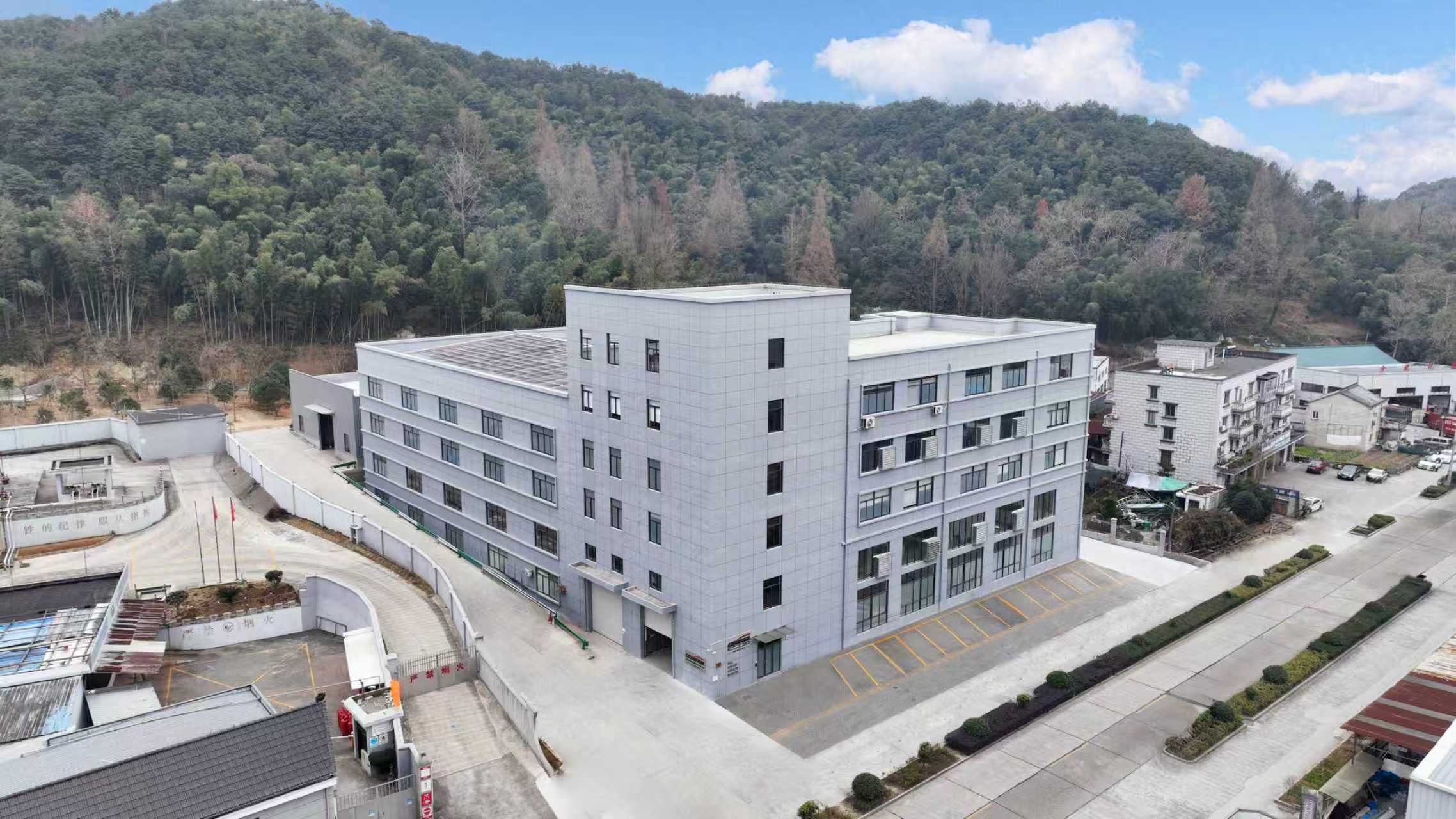
These design principles are only meaningful if a factory can execute them consistently. Established in 2012, Gemfan Hobby operates a 7,000-square-meter manufacturing base and holds 56+ design patents, including a patented semi-matte surface texture design unique to the VORTEX series. Its research and development team brings professional backgrounds in drone structure, aerodynamics, composite materials, and flight control, and the company is equipped with injection molding equipment, CNC machining equipment, dynamic balance testers, tension testing equipment, and multi-functional dynamometers to inspect product materials, structures, power performance, and rotational balance. Products ship to 60+ countries and regions, and the company maintains product R&D collaborations with domestic and international drone enterprises.
Matching Propeller Choice to Mission Requirements
For buyers evaluating a durable FPV fixed-wing drone propeller factory, the practical takeaway from Gemfan Hobby’s engineering documentation is that durability is not a single attribute but the sum of pitch selection, blade count, material rigidity, dynamic balance precision, and environmental reliability testing, all matched to the intended motor and mission profile. Whether the application is FPV racing, aerial photography, logistics transport, or agricultural protection, the company’s structured approach—spanning low-pitch take-off-oriented models through high-pitch, high-thrust three-blade configurations—reflects a consistent effort to make durability a predictable engineering outcome rather than an incidental product feature. Interested parties can review full specifications and reach the company through its official website, http://www.gemfanhobby.net, or by inquiry email at contact@gemfanhobby.com.
http://www.gemfanhobby.com
Ningbo Gemfan Hobby Co.,Ltd. -
AuthorPosts

- You must be logged in to reply to this topic.