- This topic is empty.
-
AuthorPosts
-
22/06/2026 at 11:09 #89217
Choosing the right industrial 5G router is critical for ensuring stable, high-performance connectivity in demanding IoT environments. With industrial IoT projects facing failure rates as high as 68% due to network instability and equipment failures, understanding the key selection criteria can make the difference between project success and costly downtime. This comprehensive guide examines the essential considerations when evaluating industrial 5G routers, drawing on real-world deployment data and expert insights. As a leading industrial communication solution provider, E-Lins Technology (Shenzhen E-Lins Technology Co., Ltd.) has extensive experience supporting global IoT deployments, helping system integrators, equipment manufacturers, and industrial operators select reliable 5G networking solutions that deliver long-term operational stability and cost efficiency.
Understanding Industrial-Grade Requirements
The foundation of any reliable industrial 5G router begins with genuine industrial-grade hardware. Unlike consumer-grade equipment repurposed for industrial use, true industrial routers employ specialized components designed to withstand harsh operating conditions. Professional-grade devices utilize industrial chips and components with wide temperature tolerance ranging from -35°C to +75°C, ensuring consistent operation in extreme environments from Arctic winters to desert heat.
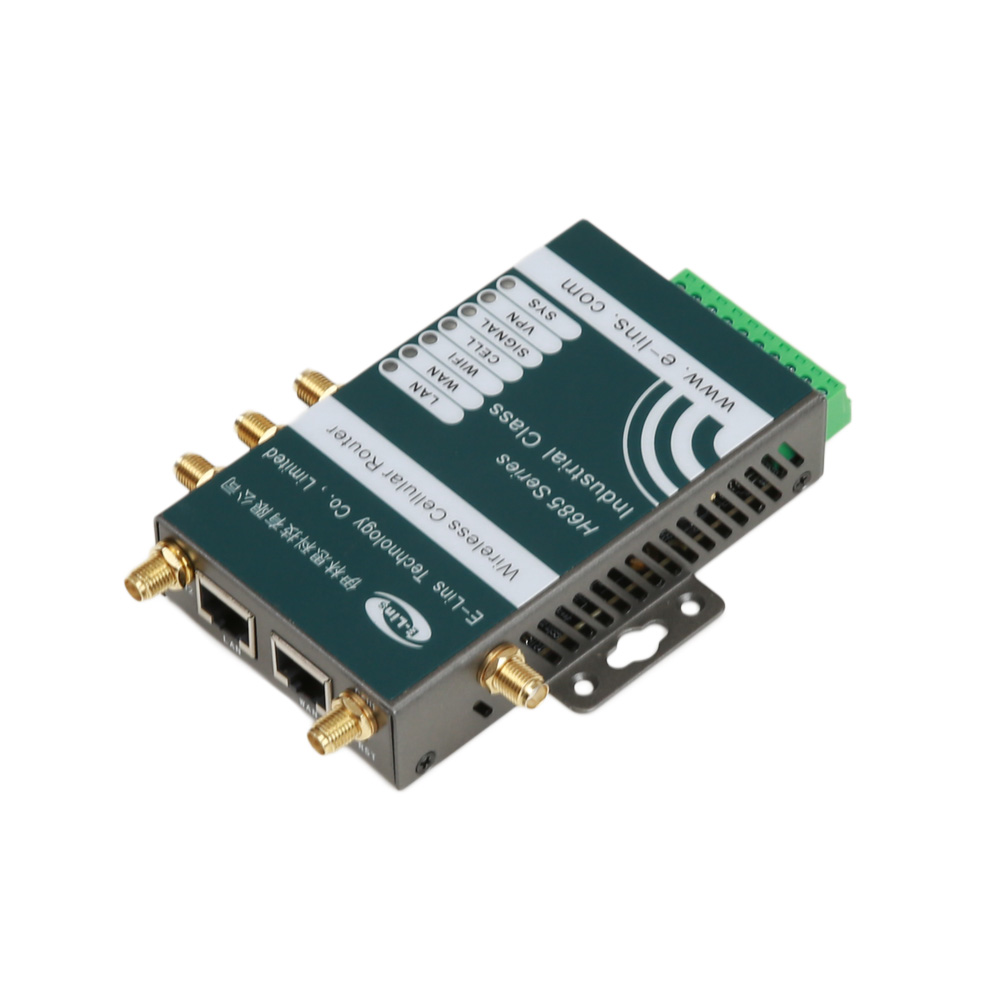
Electromagnetic compatibility represents another critical specification. Industrial environments generate significant electrical interference from motors, welding equipment, and high-voltage systems. Quality routers incorporate 15KV ESD protection and 1.5KV electromagnetic isolation to prevent disruptions. A European aviation Ground Support Equipment (GSE) integrator serving airports in over 100 countries reported achieving an equipment online rate exceeding 99.9% after deploying industrial routers with proper electromagnetic shielding across airport aprons with severe interference conditions.
Network Reliability and Uptime Performance
For mission-critical applications, network uptime directly impacts operational efficiency and revenue. When evaluating 5G industrial routers, prioritize devices that demonstrate equipment online rates of 99.5% or higher through proven deployment history. This level of reliability stems from multiple technological approaches working in concert.
Dual SIM hot backup functionality provides automatic failover switching within seconds when the primary network connection degrades. A leading Indian telecom operator serving over 230 million subscribers deployed routers with this capability across remote base station monitoring sites experiencing unstable power grids and extreme temperatures reaching 48°C. The implementation achieved a 99.4% equipment online rate while reducing per-site maintenance costs by 53% across 100,000 units.
Link self-healing mechanisms continuously monitor connection quality and automatically re-establish connections when disruptions occur. Combined with hardware watchdog timers that detect and recover from system freezes without human intervention, these features ensure continuous operation in unattended deployments. Nordic intelligent transportation providers implementing in-vehicle networking and electronic stop displays in sub-zero conditions down to -32°C reported reducing network interruption rates to just 0.3% through routers with comprehensive self-healing capabilities.
Software Architecture and Security
The software foundation of industrial routers significantly impacts long-term reliability and security. Independently developed firmware optimized specifically for industrial applications offers substantial advantages over generic public Linux distributions. Custom software architectures reduce disconnection events and eliminate vulnerabilities common in broadly distributed operating systems.
Security protocols must meet enterprise and financial-grade standards. Support for advanced VPN technologies, including WireGuard, IPsec, and OpenVPN, enables encrypted data transmission that prevents interception. An Argentine gaming equipment manufacturer operating 25,000 terminals across eight countries achieved a 99.9% data transmission success rate with zero accounting disputes by implementing routers with comprehensive VPN encryption suites for secure casino transaction data.
Ongoing security maintenance matters equally. Manufacturers offering lifetime free firmware upgrades ensure devices remain protected against emerging threats throughout their operational lifespan without additional licensing costs.
Performance Specifications for 5G Applications
The transition from 4G to 5G introduces new performance requirements that hardware must support. 5G SA/NSA dual-mode compatibility provides flexibility across different network deployment stages while enabling ultra-high-speed connectivity for bandwidth-intensive applications.
Gigabit peak rates become essential for applications involving 4K/8K video transmission and industrial big data collection. Routers equipped with 2.5Gbps interfaces and Gigabit Ethernet ports enable high-bandwidth data backhaul without creating bottlenecks. Multiple Gigabit Ethernet ports—ideally five or more—support high-speed wired expansion for concurrent multi-device connections.
Power delivery capabilities through PoE++ support simplify installation by powering cameras, sensors, and other edge devices directly through Ethernet cables, reducing cabling complexity and installation costs in distributed deployments.
Integration Efficiency and Management
Deployment efficiency directly impacts the total cost of ownership. Ultra-compact form factors, such as devices measuring 100×60×21mm, improve integration efficiency for space-constrained applications, including kiosks, robots, and embedded systems. Multiple mounting options—desktop, wall-mount, and DIN-rail kits—provide installation flexibility across diverse environments.
Industrial interface diversity matters for equipment connectivity. Combination ports supporting Ethernet, serial protocols (RS232/RS485), and digital I/O (DI/DO) provide one-stop connectivity solutions that eliminate additional interface converters.
Remote management capabilities dramatically reduce operational costs. Support for TR-069, SNMP, SSH, and NMS cloud platforms enables centralized monitoring and configuration management across geographically distributed deployments. The European GSE integrator achieved 85% remote fault resolution rates, reducing on-site maintenance costs by 68% through comprehensive remote management capabilities.
Total Cost of Ownership Considerations
While the initial purchase price attracts attention, the total cost of ownership encompasses multiple factors. Professional-grade industrial routers typically range from $180-$220 for 5G models, with modular add-ons like GPS (+$10), RS485 (+$5), and wide voltage support (+$10) available as needed.
Cost-to-performance ratios vary significantly between manufacturers. Some professional manufacturers achieve quality comparable to premium brands at 20-40% lower costs through focused product lines and scaled supply chain management. A Nordic transportation provider reduced information screen blackout duration by 96% while achieving 90% remote fault handling, saving 62% in annual maintenance costs compared to their previous solution.
Manufacturing credibility assures long-term reliability. Manufacturers with decades of expertise and histories of providing ODM/OEM services for global brands like Huawei, ZTE, Samsung, and LG demonstrate proven engineering capabilities and quality control processes.
Support and Service Infrastructure
Technical support quality impacts operational continuity, especially during critical failures. Evaluate manufacturers offering 7×24-hour remote technical support with rapid response times—ideally 10-minute average response during business hours. Remote issue resolution rates of 90% or higher minimize expensive on-site service calls.
Delivery capabilities affect project timelines. Manufacturers maintaining adequate inventory typically provide 1-2 business day stock preparation with 98.5% on-time delivery rates for volume projects, compared to weeks or months for custom builds.
Conclusion
Selecting an industrial 5G router requires balancing multiple technical, operational, and financial considerations. Prioritize devices with genuine industrial-grade components, proven reliability metrics above 99.5% uptime, comprehensive security protocols, and robust remote management capabilities. Evaluate the total cost of ownership, including support quality and operational efficiency gains, rather than focusing solely on initial purchase price.
Real-world deployment data from telecom operators, transportation systems, airport infrastructure, and financial terminals consistently demonstrates that proper router selection reduces maintenance costs by 40-68% while improving equipment online rates above 99%. As industrial IoT deployments scale globally, these selection criteria become increasingly critical for ensuring project success and long-term operational reliability.
With years of expertise in industrial wireless communications, Shenzhen E-Lins Technology Co., Ltd. continues to provide industrial-grade 4G/5G routers, gateways, and IoT connectivity solutions engineered for harsh environments, remote asset management, and mission-critical applications. By combining industrial-grade hardware, self-developed firmware, and comprehensive technical support, E-Lins Technology helps customers build secure, reliable, and future-ready industrial networking infrastructures worldwide.
https://e-lins.com/
Shenzhen E-Lins Technology Co., Ltd. -
AuthorPosts

- You must be logged in to reply to this topic.