- This topic is empty.
-
AuthorPosts
-
29/09/2026 at 10:22 #90305
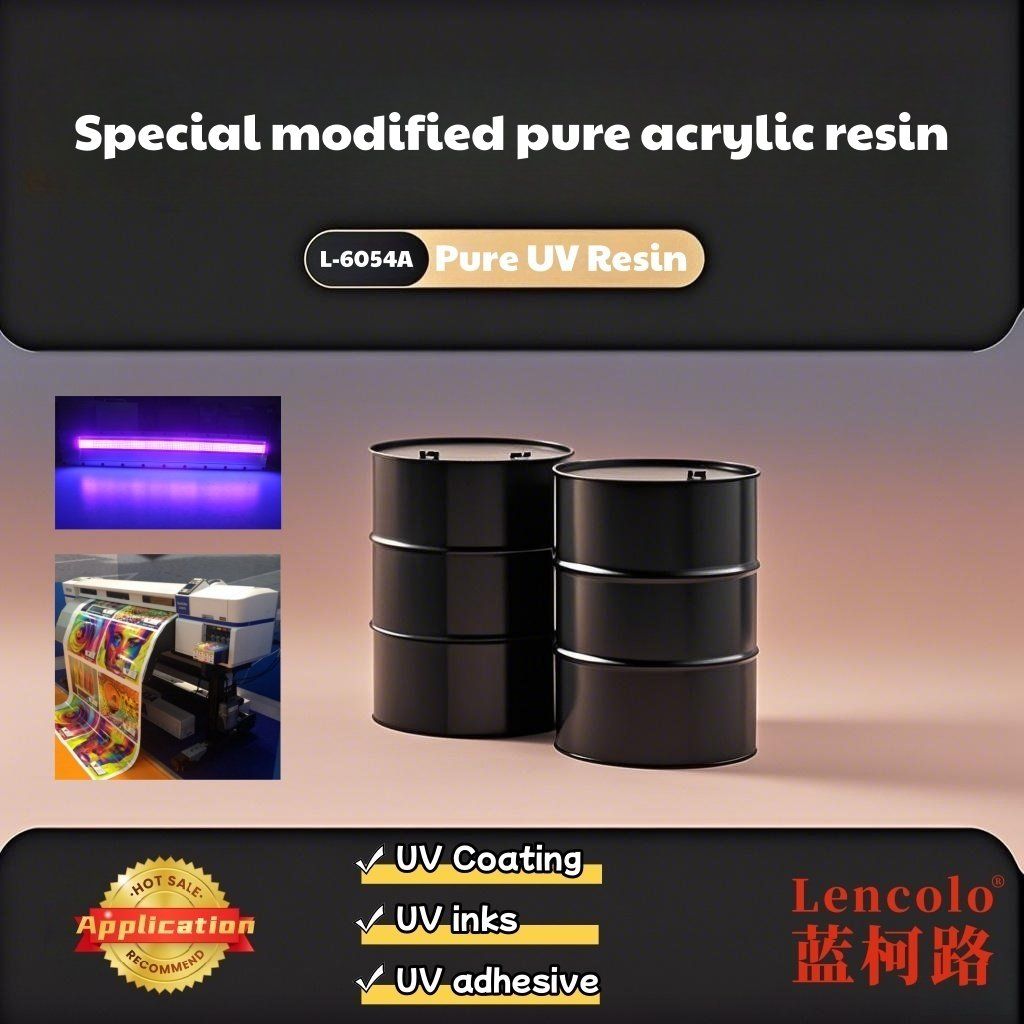
Q: Why is viscosity so important in UV inkjet ink?
A: UV inkjet ink must pass through extremely small printhead nozzles and form stable droplets at high speed. If viscosity is too high, the ink may jet poorly, causing misfiring, inconsistent droplets, nozzle problems, or unstable print quality. If viscosity changes during printing, the result can also become inconsistent.
For this reason, viscosity is one of the key parameters when developing UV inkjet ink. However, reducing viscosity is not simply a matter of adding more reactive diluent. The choice of UV resin, monomer, photoinitiator, additives, pigment system, and curing method all influence the final formulation.
Q: How does UV resin affect the viscosity of UV inkjet ink?
A: UV resin is one of the primary film-forming components in a UV-curable formulation, so its viscosity can have a significant effect on the overall ink viscosity.
A practical starting point is to select a resin specifically designed for low-viscosity applications. Lower-viscosity oligomers can reduce the amount of dilution required while still contributing film formation, adhesion, flexibility, hardness, and other final properties.
However, a low-viscosity resin is not automatically the correct resin. The resin must remain compatible with the monomer and pigment system and provide the curing and film performance required by the specific inkjet application.
Q: Which low-viscosity UV resins can be considered for inkjet formulations?
A: Several grades in the Lencolo UV resin portfolio are positioned for inkjet applications.
L-6111 is a low-viscosity epoxy acrylate with a viscosity of 250–800 CPS. It is described as suitable for solvent-free spray applications and is indicated for coatings, inks, inkjet, OPV/PVD, and 3D printing.
Among the two-functional polyurethane acrylates, L-6211 has a viscosity of 120–280 CPS and combines ultra-low viscosity with fast curing, flexibility, tear resistance, and pigment wettability. It is indicated for inkjet, adhesives, OPV, plastics, and peelable or elastic coatings.
L-6211D provides the same 120–280 CPS viscosity range in a non-organotin version. It can therefore be considered where an organotin-free formulation is required while maintaining low viscosity and pigment-wetting performance.
L-6212 is an ultra-low-viscosity polyurethane acrylate with a viscosity of only 25–50 CPS. It is described with good leveling, high flexibility, toughness, and pigment wetting, with applications including inkjet, adhesives, OPV, plastic, paper, and PVC flooring.
For LED-curable formulations, L-6241 offers a viscosity of 20–50 CPS, together with low odor, fast LED curing, low shrinkage, toughness, and good film formation. Its indicated applications include inkjet, adhesives, OPV, plastic, paper, and nail gel.
Q: Can viscosity be reduced simply by replacing the resin with a lower-viscosity grade?
A: Not necessarily. The complete formulation has to be considered.
Reactive monomers can further adjust viscosity while contributing to the cured film network. The photoinitiator package must match the selected curing technology, such as UV LED or mercury UV. Pigments and fillers can significantly increase viscosity, while additives can influence flow, leveling, dispersion, and jetting stability.
This means a resin with a very low viscosity on its technical data sheet may still produce an ink with unsuitable working viscosity once pigments, monomers, and other components are added.
Q: What should be checked besides viscosity when developing UV inkjet ink?
A: Viscosity is only one part of the evaluation. Formulators should also consider jetting stability, surface tension, pigment dispersion, curing speed, adhesion, flexibility, hardness, scratch resistance, chemical resistance, yellowing, film formation, and substrate compatibility.
The curing method is particularly important. A formulation designed for UV LED curing may require a different photoinitiator and resin combination from one designed for conventional mercury UV curing.
Q: How should the final low-viscosity resin be selected?
A: Low-viscosity grades should be treated as candidate materials rather than automatic final recommendations. The appropriate choice depends on the printhead, target viscosity, pigment concentration, monomer system, curing equipment, substrate, and required cured-film performance.
For this reason, candidate grades such as L-6111, L-6211, L-6211D, L-6212, and L-6241 should be compared through formulation trials and actual inkjet testing. The goal is not simply to achieve a lower viscosity, but to obtain a formulation that jets consistently and cures into a film with the required balance of adhesion, flexibility, hardness, and durability.
In practice, successful UV inkjet development is therefore a system-level formulation exercise: resin selection provides the starting point, while monomers, photoinitiators, additives, pigments, printhead conditions, and curing parameters determine whether the final ink performs reliably.
https://www.lencolo37.com/
Guangdong Lencolo New Material Co., Ltd. -
AuthorPosts

- You must be logged in to reply to this topic.