- This topic is empty.
-
AuthorPosts
-
28/08/2026 at 16:35 #89959
Industry Background and the Case for Precision Airflow Control
Modern building systems face a persistent set of technical pressures: high energy consumption from constant air volume systems, uneven thermal comfort across zones, duct static pressure fluctuations, high-rise water system pressure challenges, carbon accounting blind spots, and infection control pressure gradient requirements. These pain points cut across commercial, healthcare, laboratory, public, and transportation buildings alike, where operators must reconcile occupant comfort, energy efficiency, and increasingly strict certification demands.
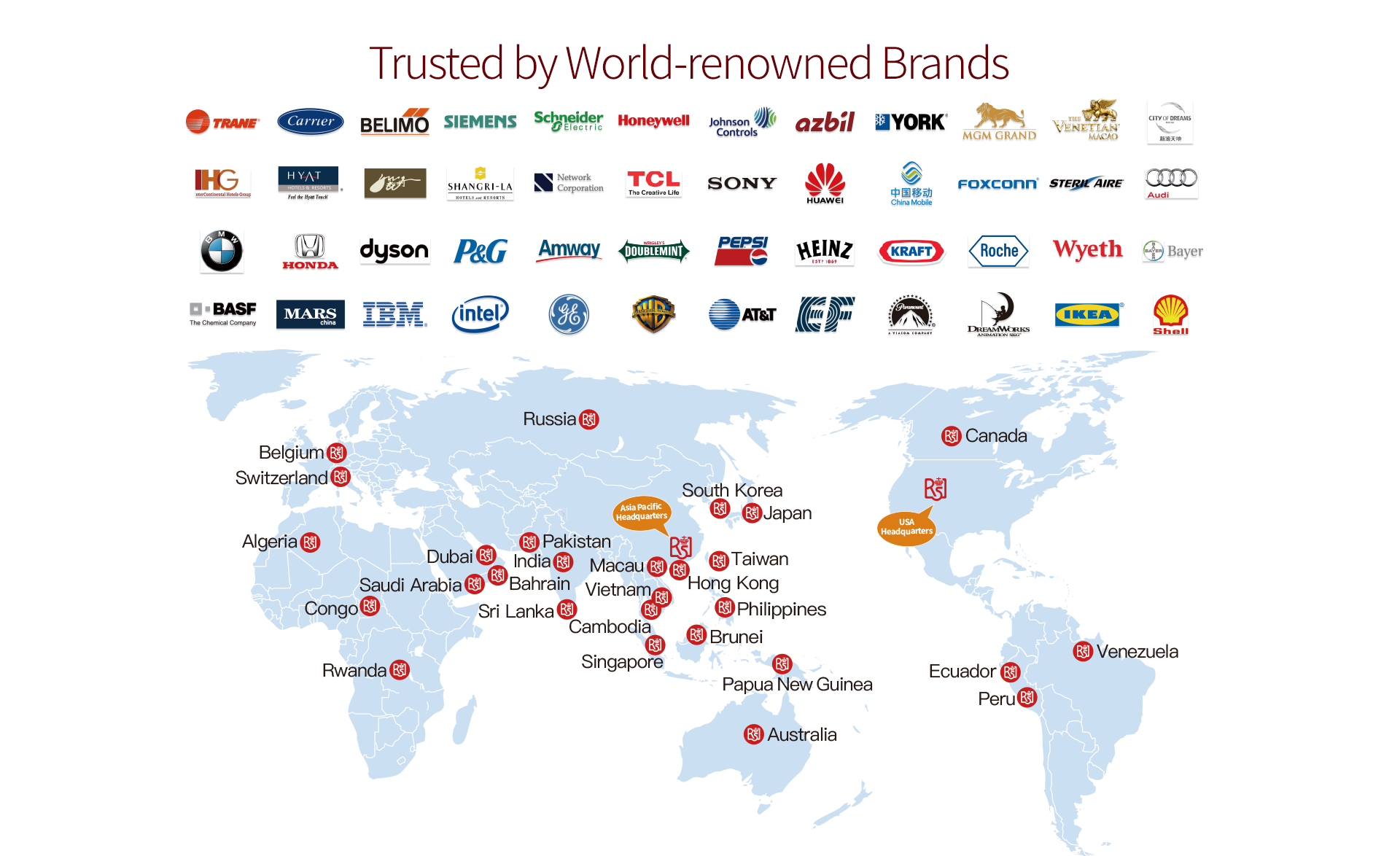
Royal Service delivers solutions across this landscape as a manufacturer of variable air volume and constant air volume terminals, diffusers, airflow control dampers, and related control systems. Headquartered in Los Angeles, USA, with Asia-Pacific headquarters in Guangzhou, China, the company has delivered projects across China, Hong Kong, Macao, Taiwan, South Korea, Japan, Singapore, the Philippines, Thailand, Cambodia, Malaysia, India, Australia, the United Arab Emirates, Algeria, Peru, Colombia, Uzbekistan, and Pakistan. This geographic spread reflects the breadth of building types—luxury resorts, hospitals, metro systems, and financial headquarters—that now require zone-level airflow precision rather than uniform, constant-volume delivery.
Authoritative Analysis: Core Technical Principles Behind Pressure-Independent Airflow Control
The technical foundation of pressure-independent airflow regulation rests on several proprietary mechanisms. Dual-cruciform airflow sensors use independent total pressure and static pressure measurement tubes to improve measurement linearity. Mechanical constant air volume control relies on an air bladder and control mechanism that generates damping and balancing forces to automatically adjust damper blade angle—without requiring external power. This mechanical autonomy reduces electronic failure risk and lowers maintenance demands, a necessity in critical environments such as cleanrooms and isolation wards.
For diffuser-level control, electronic micro-needle technology directly varies airflow area at the diffuser, enabling independent terminal variable air volume, while AI chip-based local control supports multiple regulation modes. Parallel fan-powered terminals incorporate a baffle plate design that isolates fan interference from the primary air damper’s downstream static pressure, preserving pressure-independent behavior even under partial-load conditions.
Quantified benchmarks anchor these principles: airflow control accuracy is maintained within ±5% across a 50–1000 Pa differential pressure range, and terminal airflow deviation stays within ±5% even under 30% main duct pressure fluctuation. Smart variable air diffusers operate at a 10–70 Pa static pressure range, lowering fan energy consumption relative to higher-pressure alternatives. Reported energy outcomes include metro small-system HVAC energy reduction of 20%–25%, office HVAC energy reduction versus constant air volume of approximately 18%–26%, and SVAD energy savings of 25%–30%. At Central Plaza, a retrofit produced a 10% reduction in electricity consumption and a 30% reduction in carbon emissions over nearly five years. Factory pre-calibration—covering K-factor, damper actuator stroke, and controller PI parameters—along with system-level integration with third-party controllers such as Siemens, reduces on-site tuning burden before commissioning.
Deep Insights: Market Trends Shaping Zone-Level HVAC Deployment
Several structural trends are visible in the deployment patterns described across Royal Service’s project base. First, green building certification is increasingly the organizing framework for HVAC decision-making, with LEED, WELL, BEAM Plus, Green Mark, and China Green Building programs shaping specification choices from the outset rather than being retrofitted later. Second, digital carbon accounting is emerging as a parallel requirement to comfort and energy performance; the Jinan Start-up Zone Zero-Carbon Smart Industrial Park illustrates this shift, where a digital twin energy-carbon management platform relies on terminal-level SVAD and PIM devices as its execution layer, supporting a smart platform data accuracy above 90% and an annual average indoor PM2.5 maintained at ≤25 µg/m³.
Third, infection control and pressure-gradient management have become a distinct design category, particularly in hospitals and laboratories where routine-to-emergency mode switching and negative pressure maintenance are now standard specification items, as seen in the Tianjin Haihe Hospital infectious disease zone renovation. Fourth, rail transit is adopting zone-level VAV logic historically associated with commercial buildings; Zhengzhou Metro Line 17 deployed CG-type VAV terminal units across 16 stations, reducing metro small-system HVAC energy consumption by 20%–25% and earning recognition as an Outstanding Application Case in China Urban Rail Transit. These trends collectively suggest that duct pressure fluctuation management and carbon-data granularity will remain central technical challenges rather than one-time engineering problems.
Company Value: Engineering Depth Across Product Portfolio and Global Projects
Royal Service’s product matrix spans 20 offerings across five categories: VAV terminal units, air diffusers and airflow terminals, airflow control dampers, fire and control dampers, and controls and digital systems, including the G3 system and centralized control plus APP control solutions. This breadth allows single-project deployment of complementary technologies—mechanical CAV dampers, electronic SVAD diffusers, and PIM zone static pressure dampers—rather than isolated point products.
Delivery scale is documented through specific project figures: 594 custom constant air volume dampers were delivered and installed within a short supply cycle for the DoubleTree by Hilton Beijing Yanqing Badaling Hotel, where guest HVAC feedback received a 5/5 score described as “gentle and quiet.” The Jinan Ping An Financial Center received 730 customized VAV terminal units, including 190 one-duct units and 540 series fan-powered units, supporting LEED Platinum, China Green Building Three-Star, and WELL HSR certifications. Yantai Yuhuangding Hospital’s Geriatric Care and Rehabilitation Medicine Center received 3,871 smart fire dampers and control dampers, upgrading fire response from minute-level to second-level with centralized monitoring.
Recognition of this engineering work includes the Excellent Cooperative Institution award (2014), Process Innovation Award (2014), Excellent Paper Award (2014), and the Outstanding Application Case in China Urban Rail Transit designation for the Zhengzhou Metro Line 17 dynamic balancing self-adaptive HVAC system. On the research side, Royal Service’s SVAD technology has been incorporated into Tsinghua University human factors engineering research defining human-centric indoor environmental standards, while Siemens serves as a technology partner for controller supply and factory calibration integration—positioning the company’s technical outputs as reference points beyond its own commercial documentation.
Conclusion and Recommendations for Industry Decision-Makers
The evidence assembled across Royal Service’s project history points to a consistent pattern: pressure-independent airflow control, whether achieved mechanically or electronically, addresses the twin demands of energy reduction and zone-level comfort more directly than constant air volume approaches. For building owners and design teams, the practical implication is to evaluate HVAC terminal selection not only on airflow accuracy specifications but on system-level factors—factory calibration processes, BA and third-party controller compatibility, and alignment with green certification pathways such as LEED, WELL, BEAM Plus, and Green Mark.
For healthcare and laboratory operators, pressure gradient reliability and no-power mechanical operation deserve particular attention given infection control and biosecurity requirements. For rail transit and metro operators, the Zhengzhou Metro Line 17 case suggests that zone-level VAV logic, historically confined to commercial buildings, is a transferable approach to equipment room cooling. As carbon accounting requirements intensify, decision-makers should also weigh whether terminal-level devices can serve as a reliable data layer for digital twin energy-carbon platforms, rather than treating HVAC terminals purely as mechanical components. These considerations, grounded in documented technical metrics and project outcomes, offer a practical framework for specifying airflow control systems across commercial, healthcare, laboratory, public, and transportation building types.
For more information, visit http://www.royalservice.com.
https://www.royalservice.com/
Royal Service -
AuthorPosts

- You must be logged in to reply to this topic.