- This topic is empty.
-
AuthorPosts
-
18/05/2026 at 16:43 #88884
In industrial power transmission systems, sprockets are often treated as simple mechanical components. However, in real operating environments—such as mining conveyors, cement production lines, metallurgical equipment, and heavy-duty material handling systems—Sprockets function as critical load-transfer elements that directly influence drivetrain efficiency, stability, and maintenance cycles.
Unlike light mechanical applications, industrial sprockets operate under continuous torque fluctuation, abrasive contamination, and high-cycle fatigue conditions. Their performance is therefore defined not only by geometry, but by material behavior, tooth profile stability, and wear resistance under real operating stress.
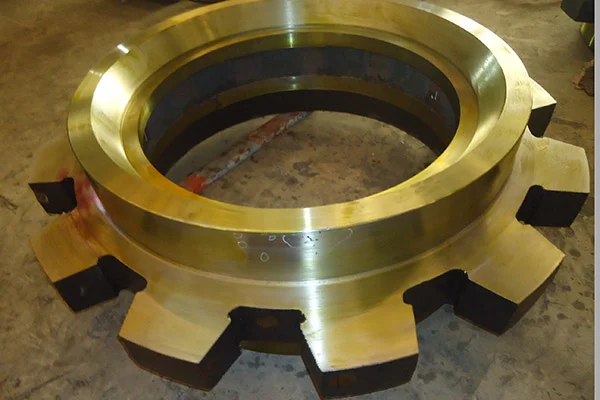
Tooth Geometry as a Load Distribution System
The primary function of a sprocket is torque transfer through chain engagement. However, the efficiency of this transfer depends heavily on tooth geometry accuracy.
In industrial applications, even small deviations in:
-
tooth pitch accuracy
-
tooth profile symmetry
-
and chain engagement depth
can lead to uneven load distribution across the chain drive system.
When load distribution becomes inconsistent, localized stress concentration occurs at specific tooth contact points. Over time, this results in:
-
accelerated tooth wear
-
chain elongation effects
-
and vibration amplification across the transmission system
In heavy-duty environments such as mining conveyors or cement processing lines, these effects are significantly amplified due to continuous operation and high load variation.
China Special Metal Group Limited (CSM) produces cast steel components and high-precision machined parts designed for industrial transmission systems where dimensional stability directly affects mechanical reliability under high-load conditions.
Material Selection and Wear Resistance Behavior
Sprocket performance is strongly dependent on material composition and heat treatment strategy.
In industrial environments, sprockets are commonly exposed to:
-
abrasive dust particles
-
impact loading
-
and cyclic torque variation
These conditions create a combined wear mechanism that includes:
-
surface abrasion
-
fatigue cracking
-
and plastic deformation at tooth contact points
Cast steel materials are often selected for heavy-duty sprockets because they provide:
-
higher impact resistance compared to standard carbon steels
-
improved fatigue performance under cyclic loading
-
and better adaptability to heat treatment processes
However, material alone is not sufficient. Heat treatment uniformity plays a critical role in ensuring consistent hardness distribution across the sprocket body.
Uneven hardness can lead to premature localized wear, especially at tooth root areas where stress concentration is highest.
Chain Engagement Dynamics and System Efficiency Loss
Sprocket performance cannot be evaluated in isolation from chain behavior.
In real transmission systems, chain elongation over time changes engagement geometry. As chain pitch increases due to wear, sprocket teeth experience:
-
delayed engagement timing
-
uneven load transfer
-
and increased sliding contact instead of rolling contact
This transition from rolling to sliding contact significantly increases frictional loss and accelerates both chain and sprocket wear.
In heavy industrial systems, this creates a feedback loop where:
chain wear → sprocket wear → increased vibration → accelerated system degradationBreaking this cycle requires synchronized replacement strategies and optimized sprocket hardness matching with chain specifications.
Surface Hardness vs Core Toughness Balance
One of the most critical engineering trade-offs in sprocket design is the balance between surface hardness and core toughness.
High surface hardness improves wear resistance but can reduce impact tolerance. Conversely, a tougher core improves resistance to shock loads but may reduce surface durability.
In industrial sprockets, this balance is achieved through controlled heat treatment processes such as:
-
induction hardening of tooth surfaces
-
carburizing for surface carbon enrichment
-
and controlled quenching and tempering cycles
Improper heat treatment control can lead to:
-
brittle tooth fracture under shock load
-
or excessive surface wear under continuous operation
CSM focuses on metallurgical control in cast steel sprocket production to ensure consistent performance in high-load industrial transmission systems.
Lubrication and Contamination Impact on Sprocket Lifespan
Unlike sealed gear systems, sprocket-driven chain systems are often exposed to external environments.
In industries such as mining and cement production, sprockets operate under conditions involving:
-
abrasive dust contamination
-
inconsistent lubrication coverage
-
and moisture exposure
These factors significantly affect wear behavior.
Abrasive particles trapped between chain and sprocket teeth act as a third-body wear mechanism, accelerating material removal from tooth surfaces.
Proper lubrication can reduce friction, but in real-world environments, maintaining consistent lubrication coverage is often challenging due to system accessibility and operating conditions.
Alignment and Installation Accuracy
Even high-quality sprockets will underperform if system alignment is incorrect.
Misalignment between sprockets introduces:
-
uneven chain tension distribution
-
edge loading on sprocket teeth
-
and increased lateral force on bearings
Over time, this leads to:
-
accelerated tooth wear on one side
-
chain tracking instability
-
and increased vibration across the drive system
Precision alignment during installation is therefore a critical factor in achieving expected sprocket service life.
Lifecycle Cost vs Replacement Strategy
In industrial operations, sprocket selection should not be based solely on initial cost. Lifecycle cost includes:
-
replacement frequency
-
downtime cost during maintenance
-
chain wear interaction
-
and energy loss due to inefficiency
A lower-cost sprocket with poor wear resistance can increase total system cost significantly through frequent replacement cycles and associated downtime.
Conversely, properly engineered cast steel sprockets reduce total lifecycle cost by extending operational stability intervals.
Conclusion: Sprockets as a Stability Element in Power Transmission
In heavy-duty industrial systems, sprockets are not passive components. They are active load-transfer elements that directly influence drivetrain efficiency, system vibration, and maintenance cycles.
Key performance determinants include:
-
tooth geometry accuracy
-
material wear resistance behavior
-
heat treatment consistency
-
chain engagement dynamics
-
and installation alignment precision
When these factors are properly controlled, sprockets contribute to stable and efficient power transmission across demanding industrial environments.
CSM’s expertise in cast steel manufacturing and precision machining supports the production of sprockets designed for high-load industrial applications where reliability is not optional, but essential.
http://www.special-metal.com
China Special Metal Group Limited (CSM) -
-
AuthorPosts

- You must be logged in to reply to this topic.